Jim Sinclair - 1980 Was a Warmup, Gold to Range $400 a Day
Today legendary trader and investor Jim Sinclair told King World News that movements in gold will become so violent that gold will become untradable to individuals. Sinclair also said that gold will be the last great bubble as it goes into a geometric uptrend. Here is what Sinclair had to say about what we can expect to see going forward: “Liquidity, it’s as simple as that. All of this is the event that’s taken place many times in history. Many times in history there has been an inflation caused by volatility in currencies called currency induced cost push inflation.”
“The younger generation has no concept of this. They look at inflation as ebullient business and they look at deflation as being a breadline. They don’t recognize that during a period of extremely difficult business conditions, (you see) some of the highest rates of inflation.
It’s a question of whether our indicators will ever show inflation again. But the truth is if you go back to how the inflation was calculated in the 1970s, you get a good look at what’s going on right now.
“This great kick of the can down the road will only be cured by a commodity currency. That’s how it’s been cured all throughout history and that’s how it will be cured this time. 1980 was a dress rehearsal. This time gold is going into the system.
The last man standing will be the standard that will hold the currency and correct the problem, that’s gold. That is the only investment that will make it through this turbulent period, regardless of how volatile it may become.
We opened up the week in which the price of gold has changed $60. But we’ve been changing to $60 during a day’s session. There will be times when it will be in the hundreds (of dollars) during the session. You will easily see a $400 (range in gold) in a day, there is no question about it.
Back in 1980 we had days where gold moved $150. What do you think is about to happen if what we’ve just been through is the beginning of a geometric uptrend? Gold will be untradable to the individual.
There’s no question that every market, prior to reaching maximum valuation will take on a characteristic. That characteristic we’ve defined as a ‘Rhino Horn.‘ There has been no such event in the gold market and in the gold share market even less so.
There is no evidence of a top. Before this market is over, we will see what we’ve seen in all markets that go into it. The last great bubble which will not break is gold.”
![[Most Recent Quotes from www.kitco.com]](http://www.kitconet.com/images/quotes_7a.gif)
Click to Enlarge
Close Call For US Banks


New, Large Buyer Enters Gold Market
The following article is short and to the point. Any time a large buyer such as a central bank enters the tiny gold market, prices are sure to move to the upside.
Ben Davies - Central Bank Buying Has Gold Shorts Trapped
Today Ben Davies told King World News that a new buyer has come into the gold market. This buyer is very large and it has trapped some of the shorts in the gold market. Davies, who is CEO of Hinde Capital, also spoke with KWN about short-term price targets. Here is what Davies had to say: “Fantastic action indeed and I think it’s caught a lot of the participants in the market offside. When a market moves, as gold did, from structurally oversold and moves back quite quickly in the medium-term, particularly when a market is perceived to be in a bear phase, people are very keen to take to the short side of the market.”
“Last time we spoke I said the market would chop wood so to speak and that’s what has actually happened is just a chop sideways. We felt that the market was going to break out over the bank holiday on Monday. You often have turning points over these weekends and it is either a resumption or it’s a trend change. But because we had come from a structurally oversold element in the market, we felt there was going to be a resumption (to the upside).
There were a number of reasons, the sentiment was still very attractive and positioning was light....
“There are flows into physical that some participants are not seeing. But we are hearing about (it and it) made us wary that the shorts were getting into a trapped position.
With oil prices starting to resume to the upside, there were a lot of geopolitical pressures that could underpin the (gold) market and send it higher. Everyone is looking for a reason why gold needs to go higher. The fact remains not enough people own the physical.
A new player came into the market and that caught the market substantially offside. It started on Monday. The market was quiet but a lot of option activity was taking place in the market and then again on Tuesday in the physical (market).
A bigger player (and a new player) came into the market and it’s a central bank. The fact is people don’t get what’s happening and that tells me the market is going higher.”
KWN readers will not want to miss this interview because Davies gives specific price targets for gold. He has been remarkably accurate and these price targets for gold and the corresponding time frames are directly in front of us. The KWN audio interview with Ben will be available shortly and you can listen to it by CLICKING HERE.
The following article is short and to the point. Any time a large buyer such as a central bank enters the tiny gold market, prices are sure to move to the upside.
Ben Davies - Central Bank Buying Has Gold Shorts Trapped
Today Ben Davies told King World News that a new buyer has come into the gold market. This buyer is very large and it has trapped some of the shorts in the gold market. Davies, who is CEO of Hinde Capital, also spoke with KWN about short-term price targets. Here is what Davies had to say: “Fantastic action indeed and I think it’s caught a lot of the participants in the market offside. When a market moves, as gold did, from structurally oversold and moves back quite quickly in the medium-term, particularly when a market is perceived to be in a bear phase, people are very keen to take to the short side of the market.”
“Last time we spoke I said the market would chop wood so to speak and that’s what has actually happened is just a chop sideways. We felt that the market was going to break out over the bank holiday on Monday. You often have turning points over these weekends and it is either a resumption or it’s a trend change. But because we had come from a structurally oversold element in the market, we felt there was going to be a resumption (to the upside).
There were a number of reasons, the sentiment was still very attractive and positioning was light....
“There are flows into physical that some participants are not seeing. But we are hearing about (it and it) made us wary that the shorts were getting into a trapped position.
With oil prices starting to resume to the upside, there were a lot of geopolitical pressures that could underpin the (gold) market and send it higher. Everyone is looking for a reason why gold needs to go higher. The fact remains not enough people own the physical.
A new player came into the market and that caught the market substantially offside. It started on Monday. The market was quiet but a lot of option activity was taking place in the market and then again on Tuesday in the physical (market).
A bigger player (and a new player) came into the market and it’s a central bank. The fact is people don’t get what’s happening and that tells me the market is going higher.”
KWN readers will not want to miss this interview because Davies gives specific price targets for gold. He has been remarkably accurate and these price targets for gold and the corresponding time frames are directly in front of us. The KWN audio interview with Ben will be available shortly and you can listen to it by CLICKING HERE.
Chart: America’s Per Capita Government Debt Worse Than Greece
TheWeeklyStandard.com
The office of Senator Jeff Sessions, ranking member on the Senate Budget Committee, sends along this chart, showing that 'America’s Per Capita Government Debt Worse Than Greece,' as well as Ireland, Italy, France, Portugal, and Spain:

TheWeeklyStandard.com
The office of Senator Jeff Sessions, ranking member on the Senate Budget Committee, sends along this chart, showing that 'America’s Per Capita Government Debt Worse Than Greece,' as well as Ireland, Italy, France, Portugal, and Spain:

Chart of the Day - Gas Prices
Source - As a result of ongoing geopolitical tensions (e.g. Iran) as well a spotty but generally improving global economy, the price of crude oil continues to trend higher. Since the end of September, the cost of one barrel of crude oil has increased by over $30. With oil prices trending higher, it is not all that surprising to find that gasoline prices are following suit. The average US price for a gallon of unleaded is up $1.87 per gallon since the financial crisis low. Over the past two months, gasoline prices have resumed their upward trend with an increase of $0.35 per gallon. There a couple points of interest from today's chart. For one, Middle East crises are often associated with major swings in the price of gasoline. Also, gasoline price spikes have often occurred prior to an economic downturn. In the end, gasoline prices have rarely been higher than current levels and considering the fragility of the current global economy, gasoline/oil prices are something to watch going forward.

Can't see chart? Click HERE.
Source - As a result of ongoing geopolitical tensions (e.g. Iran) as well a spotty but generally improving global economy, the price of crude oil continues to trend higher. Since the end of September, the cost of one barrel of crude oil has increased by over $30. With oil prices trending higher, it is not all that surprising to find that gasoline prices are following suit. The average US price for a gallon of unleaded is up $1.87 per gallon since the financial crisis low. Over the past two months, gasoline prices have resumed their upward trend with an increase of $0.35 per gallon. There a couple points of interest from today's chart. For one, Middle East crises are often associated with major swings in the price of gasoline. Also, gasoline price spikes have often occurred prior to an economic downturn. In the end, gasoline prices have rarely been higher than current levels and considering the fragility of the current global economy, gasoline/oil prices are something to watch going forward.

Can't see chart? Click HERE.
The Fear of Gold
By Jeff Berwick, Whiskey and Gunpowder
Just how committed should you be to holding gold (and silver)? Are you holding too much gold as it is…and not enough U.S. dollars?
Or should you be holding anything BUT gold (and silver)? Beyond the cash you need to pay your monthly living expenses, should you hold cash at all? Should every bit of your savings be held in ounces of precious metals? And every bit of your investments be in shares of the companies that drag those precious metals out of the ground?
It might have seemed like an extreme position a few years ago. Heck, it may seem extreme now! But Jeff Berwick is here to explain why it could be the most sensible, most conservative thing in the world to do…
THE FEAR OF GOLD
I was on a panel at the recent California Investment Conference in Palm Springs and the question was asked, “What percentage of your portfolio should be in gold bullion?”
The first panelist answered 20%. The second panelist said, up to 30%. Then it came to me.
“I have no problem with someone having 100% of their portfolio in gold,” I stated bluntly. Many in the crowd laughed. Their laughter confused me. What’s so funny about that, I thought?
I went on, “I think it’s weird that people find my answer weird.”
GOLD IS REAL MONEY
After all, we are talking about time tested and true money. The only money that has lasted for thousands of years and is still fully accepted worldwide as a store of wealth. Even Warren Buffet had to recently admit that “Meanwhile, if you own one ounce of gold for an eternity, you will still own one ounce at its end.”
And that from a man who hates gold the way Whitney Houston fans hate Bobby Brown. So, by stating that I have no problem with someone having 100% of their portfolio in gold I am making an ultra conservative statement. I am stating that I’d have no problem with someone having their entire portfolio in “cash”. In real money.
What would you rather hold “for eternity”? US dollars? A paper debt obligation of a bankrupt nation state?
The fact that so many found that to be a shocking statement says a lot about where we are in this current process of the collapse of the fiat currency system.
THE FEAR OF GOLD
There is such a “fear of gold” amongst most people that it must be due to statist indoctrination and propaganda. It makes no rational sense to have such a fear of such a time tested and true store of wealth.
The same people who fear gold seem to have no problem holding a significant amount of their assets in euros in a European bank as Europe burns around them, both figuratively and literally. The euro might not exist 12 months from now but no one seems too concerned. They act like its been around forever and always will be, but it only was dreamt up by globalists in 1999.
YOUR BROKER FEARS GOLD
Near the end of 2007 a good friend of mine who had been wanting to sell her house called me. I had been telling her for a few months to sell her house and buy gold because a big housing crash was coming.
She said she had received a good offer for her house and checked with me to make sure I was certain about her selling, buying gold with the proceeds, and renting for a few years. I told her, emphatically, yes.
So she sold her house. At the time gold was around $750 per ounce. We fell out of touch for a few years and she contacted me last year around when gold was near $2,000 per ounce. I smiled when she called, waiting for her to tell me about the fortune she made.
“So?” I asked, waiting for the exaltation.
“What?” she also asked, confused.
“How’d that trade work out for you?” I asked.
“Oh. Well I sold the house. And I put the funds into my brokerage account with my (government registered) financial advisor,” she responded.
My heart sank. I knew what she was going to say.
Her financial advisor had talked her out of it. He said putting all her assets into gold was far too risky. Where in the government training manuals does it tell you to even own any gold!
She got worried too and less than a year after selling, under pressure from her old Chinese parents, bought another house. It was a bit cheaper but after transaction and moving costs it was a loss.
GOLD IS IN A BUBBLE
Of course, now, with gold over $1,700, it is nearly impossible to get anyone from the general public to buy gold. It’s gone too high, they cry! CNBC says it was a bubble, they repeat like trained seals.
It’s gone from near $300 to nearly $2,000 in the last decade. Surely that is a bubble and if it hasn’t already popped it soon will, right?
No. That’s not right. This is the problem with watching the value of anything in terms of constantly depreciating US Federal Reserve Notes. In the following chart, when looking at the price of gold in nominal dollar terms it looks like an insane rocket ride of epic proportions. But, when adjusted by the US Government’s own, heavily massaged inflation statistic (the Consumer Price Index, or CPI), the price of gold has just finally reached nearly the same level it was at in 1980 and looks far less spectacular.

PORTFOLIO ALLOCATIONS
Getting back to the initial question posed on the panel as to what percentage we recommend people hold gold bullion as a percentage of their portfolio. While I stated I’d have no problem with 100%, we actually recommend to our subscribers is to hold 30% of their portfolio in bullion – both gold and silver.
We also recommend, at this time holding 20% of your portfolio in gold mining juniors and 15% in gold mining major stocks amongst other things. That’s because we are expecting all the monetary printing going on with abandon in the western world to foment a true bubble, not only in the price of gold but even moreso in the price of the mining shares, especially the juniors. We are expecting a mania for the ages in these stocks. And, how will we know when to sell? When I am asked what percentage of their portfolio should be held in gold bullion and I say 100% and no one laughs.
By Jeff Berwick, Whiskey and Gunpowder
Just how committed should you be to holding gold (and silver)? Are you holding too much gold as it is…and not enough U.S. dollars?
Or should you be holding anything BUT gold (and silver)? Beyond the cash you need to pay your monthly living expenses, should you hold cash at all? Should every bit of your savings be held in ounces of precious metals? And every bit of your investments be in shares of the companies that drag those precious metals out of the ground?
It might have seemed like an extreme position a few years ago. Heck, it may seem extreme now! But Jeff Berwick is here to explain why it could be the most sensible, most conservative thing in the world to do…
THE FEAR OF GOLD
I was on a panel at the recent California Investment Conference in Palm Springs and the question was asked, “What percentage of your portfolio should be in gold bullion?”
The first panelist answered 20%. The second panelist said, up to 30%. Then it came to me.
“I have no problem with someone having 100% of their portfolio in gold,” I stated bluntly. Many in the crowd laughed. Their laughter confused me. What’s so funny about that, I thought?
I went on, “I think it’s weird that people find my answer weird.”
GOLD IS REAL MONEY
After all, we are talking about time tested and true money. The only money that has lasted for thousands of years and is still fully accepted worldwide as a store of wealth. Even Warren Buffet had to recently admit that “Meanwhile, if you own one ounce of gold for an eternity, you will still own one ounce at its end.”
And that from a man who hates gold the way Whitney Houston fans hate Bobby Brown. So, by stating that I have no problem with someone having 100% of their portfolio in gold I am making an ultra conservative statement. I am stating that I’d have no problem with someone having their entire portfolio in “cash”. In real money.
What would you rather hold “for eternity”? US dollars? A paper debt obligation of a bankrupt nation state?
The fact that so many found that to be a shocking statement says a lot about where we are in this current process of the collapse of the fiat currency system.
THE FEAR OF GOLD
There is such a “fear of gold” amongst most people that it must be due to statist indoctrination and propaganda. It makes no rational sense to have such a fear of such a time tested and true store of wealth.
The same people who fear gold seem to have no problem holding a significant amount of their assets in euros in a European bank as Europe burns around them, both figuratively and literally. The euro might not exist 12 months from now but no one seems too concerned. They act like its been around forever and always will be, but it only was dreamt up by globalists in 1999.
YOUR BROKER FEARS GOLD
Near the end of 2007 a good friend of mine who had been wanting to sell her house called me. I had been telling her for a few months to sell her house and buy gold because a big housing crash was coming.
She said she had received a good offer for her house and checked with me to make sure I was certain about her selling, buying gold with the proceeds, and renting for a few years. I told her, emphatically, yes.
So she sold her house. At the time gold was around $750 per ounce. We fell out of touch for a few years and she contacted me last year around when gold was near $2,000 per ounce. I smiled when she called, waiting for her to tell me about the fortune she made.
“So?” I asked, waiting for the exaltation.
“What?” she also asked, confused.
“How’d that trade work out for you?” I asked.
“Oh. Well I sold the house. And I put the funds into my brokerage account with my (government registered) financial advisor,” she responded.
My heart sank. I knew what she was going to say.
Her financial advisor had talked her out of it. He said putting all her assets into gold was far too risky. Where in the government training manuals does it tell you to even own any gold!
She got worried too and less than a year after selling, under pressure from her old Chinese parents, bought another house. It was a bit cheaper but after transaction and moving costs it was a loss.
GOLD IS IN A BUBBLE
Of course, now, with gold over $1,700, it is nearly impossible to get anyone from the general public to buy gold. It’s gone too high, they cry! CNBC says it was a bubble, they repeat like trained seals.
It’s gone from near $300 to nearly $2,000 in the last decade. Surely that is a bubble and if it hasn’t already popped it soon will, right?
No. That’s not right. This is the problem with watching the value of anything in terms of constantly depreciating US Federal Reserve Notes. In the following chart, when looking at the price of gold in nominal dollar terms it looks like an insane rocket ride of epic proportions. But, when adjusted by the US Government’s own, heavily massaged inflation statistic (the Consumer Price Index, or CPI), the price of gold has just finally reached nearly the same level it was at in 1980 and looks far less spectacular.

PORTFOLIO ALLOCATIONS
Getting back to the initial question posed on the panel as to what percentage we recommend people hold gold bullion as a percentage of their portfolio. While I stated I’d have no problem with 100%, we actually recommend to our subscribers is to hold 30% of their portfolio in bullion – both gold and silver.
We also recommend, at this time holding 20% of your portfolio in gold mining juniors and 15% in gold mining major stocks amongst other things. That’s because we are expecting all the monetary printing going on with abandon in the western world to foment a true bubble, not only in the price of gold but even moreso in the price of the mining shares, especially the juniors. We are expecting a mania for the ages in these stocks. And, how will we know when to sell? When I am asked what percentage of their portfolio should be held in gold bullion and I say 100% and no one laughs.
Richard Russell - A Bitter Pill to Swallow, Austerity or Inflation
With investors globally wondering what central planners are up to next and how it will impact gold, today the Godfather of newsletter writers, Richard Russell, was discussing this very subject: “A few months ago I wrote a piece about avoiding pain in the economy. How do we do it? We do it by turning away from austerity and embracing inflation. And the question -- will the inflationary method of avoiding economic pain kill our economy, just as the drug (taking drugs) way of avoiding pain has killed so many talented musicians? I think the results will be the same.”
“The world has drunk at the punch-bowl of good times and debt ever since World War II. The world has avoided the discipline of pay-as-you-go and austerity for decades. But sooner or later the piper must be paid. Up to now, the piper has been ‘paid’ with vast amounts of fiat paper.
The politicians want to make the people happy. The Fed is beholden to the politicians. The voters want it all, and they don't like pain. The Fed and the politicians want to make the voting public fat and happy causing as little pain as possible.
Examples: courtesy of Bill Gary's great publication, ‘Price Perceptions.’
Last week the Fed announced that they were extending the current near-zero interest rates out to the end of 2014.
The European central bank gave in and finally reduced interest rates to 1%.
The Bank of England is meeting next week to decide on another round of QE. (money printing).
This week the Bank of Australia will decide on whether to reduce rates again.
The Swiss National Bank placed a currency floor of 1.2 francs per euro in September to prevent further strengthening of the franc.
Japan has been printing for years in an effort to keep the yen cheap and competitive against other currencies.
Every nation wants a cheap and export-friendly currency. The result is a blizzard of (fiat) paper money blowing across the face of the earth.
Inflation is the central banks' method of avoiding the pain of austerity. Inflation is the current economic narcotic that is used by modern nations. It's the old ‘beggar thy neighbor’ system, and it will ultimately result either in all out hyperinflation and a collapse of the fiat currency system or a corrective deflationary crash. Either way, the last currency standing will be gold.”
To subscribe to Richard Russell’s Dow Theory Letters CLICK HERE.
With investors globally wondering what central planners are up to next and how it will impact gold, today the Godfather of newsletter writers, Richard Russell, was discussing this very subject: “A few months ago I wrote a piece about avoiding pain in the economy. How do we do it? We do it by turning away from austerity and embracing inflation. And the question -- will the inflationary method of avoiding economic pain kill our economy, just as the drug (taking drugs) way of avoiding pain has killed so many talented musicians? I think the results will be the same.”
“The world has drunk at the punch-bowl of good times and debt ever since World War II. The world has avoided the discipline of pay-as-you-go and austerity for decades. But sooner or later the piper must be paid. Up to now, the piper has been ‘paid’ with vast amounts of fiat paper.
The politicians want to make the people happy. The Fed is beholden to the politicians. The voters want it all, and they don't like pain. The Fed and the politicians want to make the voting public fat and happy causing as little pain as possible.
Examples: courtesy of Bill Gary's great publication, ‘Price Perceptions.’
Last week the Fed announced that they were extending the current near-zero interest rates out to the end of 2014.
The European central bank gave in and finally reduced interest rates to 1%.
The Bank of England is meeting next week to decide on another round of QE. (money printing).
This week the Bank of Australia will decide on whether to reduce rates again.
The Swiss National Bank placed a currency floor of 1.2 francs per euro in September to prevent further strengthening of the franc.
Japan has been printing for years in an effort to keep the yen cheap and competitive against other currencies.
Every nation wants a cheap and export-friendly currency. The result is a blizzard of (fiat) paper money blowing across the face of the earth.
Inflation is the central banks' method of avoiding the pain of austerity. Inflation is the current economic narcotic that is used by modern nations. It's the old ‘beggar thy neighbor’ system, and it will ultimately result either in all out hyperinflation and a collapse of the fiat currency system or a corrective deflationary crash. Either way, the last currency standing will be gold.”
To subscribe to Richard Russell’s Dow Theory Letters CLICK HERE.
The KISS Principle
The following is an excerpt from a larger article written by Jeff Neilson entitled Precious Metals: The Only Alternative.
Regular readers know that I am a long-time disciple of the doctrine known by the acronym KISS ("Keep It Simple, Stupid"). It's a very basic (and time-tested) concept: we all stand a much better chance of being successful employing a good, simple plan rather than a good, complex plan. The logic here is irrefutable: complexity (by definition) implies the opportunity for more things to go wrong. Equally, it is much easier to both understand and implement a simple strategy rather than a complex one.
Gold and silver have perfectly preserved the wealth of their holders for thousands of years. The U.S. dollar has lost 98% of its value in less than one century (since the Federal Reserve was put in charge of "protecting it"). People can understand that.
The supply of gold and silver is increasing by only about 2% per year. Meanwhile, the supply of the bankers' paper currencies are effectively being increased by somewhere in excess of 10% per year - more than five times as much new supply. In times of economic crisis, scarce assets retain their value much better than those which are overly abundant. People understand that.
Historically, precious metals have comprised between 5% and 10% of all financial assets. Today, gold and silver (and the miners) represent little more than 1% of financial assets. If this ratio merely returns to the historical average, this implies a surge in the value of precious metals assets by multiples which would dwarf all previous gains over the past 10 years. People can understand that.
There are also a plethora of more complicated reasons for favoring gold and silver (and the precious metals miners) above all other asset classes at the present time. It's not necessary to discuss all of them here. Those people who also subscribe to the KISS principle know that you only need to be right for one or two (or three) reasons. Take your pick.
What expertise does one require to become an informed precious metals investor? You have to understand basic arithmetic. Moving one's wealth to the time-tested security provided by precious metals allows us to take control of our financial future, allows us to once again be (long term) investors rather than (short term) gamblers, and it provides us with a sound, financial strategy which we can all understand.
Ignore all of the fear-mongering and deceptions of the mainstream charlatans. For 10+ years they have an unblemished record: they have always been wrong. Cash is trash. Western bonds are nothing but financial feces. However being able to sleep well at night is "golden".
Jeff Nielson
www.bullionbullscanada.com
The following is an excerpt from a larger article written by Jeff Neilson entitled Precious Metals: The Only Alternative.
Regular readers know that I am a long-time disciple of the doctrine known by the acronym KISS ("Keep It Simple, Stupid"). It's a very basic (and time-tested) concept: we all stand a much better chance of being successful employing a good, simple plan rather than a good, complex plan. The logic here is irrefutable: complexity (by definition) implies the opportunity for more things to go wrong. Equally, it is much easier to both understand and implement a simple strategy rather than a complex one.
Gold and silver have perfectly preserved the wealth of their holders for thousands of years. The U.S. dollar has lost 98% of its value in less than one century (since the Federal Reserve was put in charge of "protecting it"). People can understand that.
The supply of gold and silver is increasing by only about 2% per year. Meanwhile, the supply of the bankers' paper currencies are effectively being increased by somewhere in excess of 10% per year - more than five times as much new supply. In times of economic crisis, scarce assets retain their value much better than those which are overly abundant. People understand that.
Historically, precious metals have comprised between 5% and 10% of all financial assets. Today, gold and silver (and the miners) represent little more than 1% of financial assets. If this ratio merely returns to the historical average, this implies a surge in the value of precious metals assets by multiples which would dwarf all previous gains over the past 10 years. People can understand that.
There are also a plethora of more complicated reasons for favoring gold and silver (and the precious metals miners) above all other asset classes at the present time. It's not necessary to discuss all of them here. Those people who also subscribe to the KISS principle know that you only need to be right for one or two (or three) reasons. Take your pick.
What expertise does one require to become an informed precious metals investor? You have to understand basic arithmetic. Moving one's wealth to the time-tested security provided by precious metals allows us to take control of our financial future, allows us to once again be (long term) investors rather than (short term) gamblers, and it provides us with a sound, financial strategy which we can all understand.
Ignore all of the fear-mongering and deceptions of the mainstream charlatans. For 10+ years they have an unblemished record: they have always been wrong. Cash is trash. Western bonds are nothing but financial feces. However being able to sleep well at night is "golden".
Jeff Nielson
www.bullionbullscanada.com
How Much Is A Trillion Dollars?
Recently, Jim Dines, author of the Dines Letter was asked about the goverment's odds of saving the economy. This was his response:
"They are borrowing money with no intention of paying it off. Politicians hope to be safely dead by the time it hits the fan. This year alone America is going to be running a deficit of 1.3 trillion dollars. Most people do not really even grasp how much a trillion dollars is. One trillion dollars. If you spend one million dollars each and every day from now on, back to the time of Jesus’ birth, you could not spend one trillion dollars. Right now America’s debt is approaching 15 trillion dollars, which are numbers used for astronomy. How is America going to earn that? With Facebook and Twitter corporations? Our industrial base is gone. Entitlements of fixed forced payments are a large and growing section of it."
Therefore his take on gold isn't surprising:
"The price of gold and silver did not go up. It is the paper money that went down. Gold and silver are the ultimate money, coins of which are good anywhere in the world, no matter what is stamped on them, and that is the money. Depending on the amount of paper each nation prints is the price of gold in that particular country, or in that particular currency.
That is one way we were protected by the price of gold. Gold is the only investible asset in the world that has gone up the last 11 years without interruption, and that is because they are just running the printing presses. The more they do, the more value builds into gold and silver. Now of course, it will have its fluctuations. It went down in the 2008 crash but came right back up and made new highs. We tend to ride those out, and it is very important understanding what the main trend is. When you are really clear what is happening in the world, you know how to place your bets, instead of doing it blindly or just following casual recommendations from people."
Recently, Jim Dines, author of the Dines Letter was asked about the goverment's odds of saving the economy. This was his response:
"They are borrowing money with no intention of paying it off. Politicians hope to be safely dead by the time it hits the fan. This year alone America is going to be running a deficit of 1.3 trillion dollars. Most people do not really even grasp how much a trillion dollars is. One trillion dollars. If you spend one million dollars each and every day from now on, back to the time of Jesus’ birth, you could not spend one trillion dollars. Right now America’s debt is approaching 15 trillion dollars, which are numbers used for astronomy. How is America going to earn that? With Facebook and Twitter corporations? Our industrial base is gone. Entitlements of fixed forced payments are a large and growing section of it."
Therefore his take on gold isn't surprising:
"The price of gold and silver did not go up. It is the paper money that went down. Gold and silver are the ultimate money, coins of which are good anywhere in the world, no matter what is stamped on them, and that is the money. Depending on the amount of paper each nation prints is the price of gold in that particular country, or in that particular currency.
That is one way we were protected by the price of gold. Gold is the only investible asset in the world that has gone up the last 11 years without interruption, and that is because they are just running the printing presses. The more they do, the more value builds into gold and silver. Now of course, it will have its fluctuations. It went down in the 2008 crash but came right back up and made new highs. We tend to ride those out, and it is very important understanding what the main trend is. When you are really clear what is happening in the world, you know how to place your bets, instead of doing it blindly or just following casual recommendations from people."
Three King World News Blogs/Interviews
The first one is a Rick Rule blog headlined "Here's What I'm Doing With My Money Right Now". The second blog is titled "Stephen Leeb: This Will Spark the Next Leg Higher in Gold"...and the audio interview is with Keith Barron.* The link to that is here.
______________________________
*Dr. Barron of Solidus Capital LTD. is responsible for one of the largest gold discoveries in history, a 13.7 million ounce gold discovery, the world largest in more than two decades. Keith has consulted for major mining companies as well as major investment houses. Keith has a Ph.D. in geology and more than 27 years of experience on all the continents (except Antarctica) and in a wide variety of commodities including gold, base metals and diamonds. Keith is known as the “Indiana Jones” of the mining world for his amazing discovery in Ecuador.
The first one is a Rick Rule blog headlined "Here's What I'm Doing With My Money Right Now". The second blog is titled "Stephen Leeb: This Will Spark the Next Leg Higher in Gold"...and the audio interview is with Keith Barron.* The link to that is here.
______________________________
*Dr. Barron of Solidus Capital LTD. is responsible for one of the largest gold discoveries in history, a 13.7 million ounce gold discovery, the world largest in more than two decades. Keith has consulted for major mining companies as well as major investment houses. Keith has a Ph.D. in geology and more than 27 years of experience on all the continents (except Antarctica) and in a wide variety of commodities including gold, base metals and diamonds. Keith is known as the “Indiana Jones” of the mining world for his amazing discovery in Ecuador.
Algorithms Taking Over The Markets
The following animated GIF chronicles the rise of the HFT Algo Machines from January 2007 through January 2012. Source
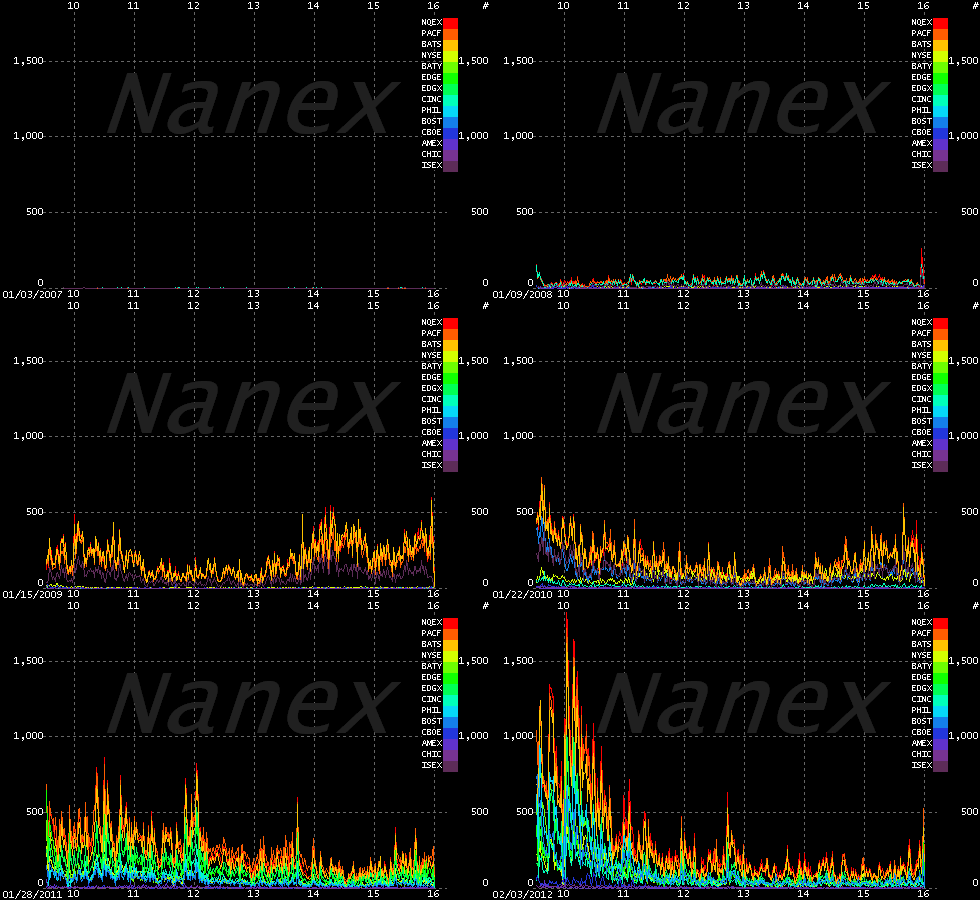
The following animated GIF chronicles the rise of the HFT Algo Machines from January 2007 through January 2012. Source
Smart Money Heads For Tangible Assets
Here's a little excerpt and excellent graph from an article entitled The Coming Paradigm Shift In Silver.
The U.S. Mint does not provide the public with annual records of exact dollar sales of their Gold and Silver Eagles.To get the figures below, the annual sales of silver and gold eagles were multiplied by their respective average yearly price reported by Kitco.com.
In times of worry in the financial system, the public regains confidence through buying gold and silver assets. During the Y2K scare, we can see that Americans were putting a great deal more money in Gold Eagles over Silver Eagles. In 1999 the public was buying 12 times the amount of money in gold than silver. Today, we see that investors are spending almost the same amount of money in both precious metals.

CLICK ON IMAGE TO ENLARGE
Here's a little excerpt and excellent graph from an article entitled The Coming Paradigm Shift In Silver.
The U.S. Mint does not provide the public with annual records of exact dollar sales of their Gold and Silver Eagles.To get the figures below, the annual sales of silver and gold eagles were multiplied by their respective average yearly price reported by Kitco.com.
In times of worry in the financial system, the public regains confidence through buying gold and silver assets. During the Y2K scare, we can see that Americans were putting a great deal more money in Gold Eagles over Silver Eagles. In 1999 the public was buying 12 times the amount of money in gold than silver. Today, we see that investors are spending almost the same amount of money in both precious metals.

CLICK ON IMAGE TO ENLARGE
Housing Bottom A Long Way Off
Here is a snippet of Ed Steer's (Casey Research) commentary on the following housing market chart.
"With this kind of overhang, the entire U.S. real estate market will be dead in the water for many, many years to come. Back in early 2007 I mentioned that I would talk about the bottom of the real estate market in 2013. Well, we're barely into the 2012 year...and I can say without fear of contradiction that this forecast I made five years ago is out by at least five years, so let's revisit this issue in 2018."

Click Chart To Enlarge
Here is a snippet of Ed Steer's (Casey Research) commentary on the following housing market chart.
"With this kind of overhang, the entire U.S. real estate market will be dead in the water for many, many years to come. Back in early 2007 I mentioned that I would talk about the bottom of the real estate market in 2013. Well, we're barely into the 2012 year...and I can say without fear of contradiction that this forecast I made five years ago is out by at least five years, so let's revisit this issue in 2018."

Click Chart To Enlarge
Rush To Buy Physical Gold And Silver Hasn’t Started Yet
By Patrick A. Heller – Liberty Coin Service
Commentary on Precious Metals Prepared for CoinWeek.com
Even though gold and silver prices are up significantly since the beginning of 2012, that doesn’t necessarily mean that this trend will continue. Buyers and sellers modify their decisions as prices change.
When you look at who is and who isn’t actively buying or selling gold and silver right now, that can give you significant clues as to where prices head in the near term.
Ever since the price of gold surpassed $1,000 for the first time in 2008, there has been significant liquidation and recycling of “scrap” gold such as jewelry and industrial products. In many instances, people who lost jobs or experienced other financial setbacks have sold assets to generate cash flow. Investment demand in the past three years has been so strong that prices continued to rise despite the increase in recycling supplies. From now into the future, however, the amount of scrap gold that could be liquidated will be smaller than it would have been because of all the gold already recycled.
The story is similar for silver. During the 1979-1980 precious metals boom, many companies acquired equipment to recycle metals. Even though prices later fell so low that it was no longer economical to acquire such equipment, it was still profitable to continue to use existing machines since the acquisition costs had already been paid. As a result, silver recycling continued at a steady pace even when prices were far lower during the past few decades.
Therefore, there is less silver available for recycling today and in the future than there would have been. Another factor to consider is that the use of silver in photography (including x-rays) has fallen sharply in the past decade or so. This is significant because a high percentage of silver used in photography is recycled. As the amount of silver used in photography has fallen, so has the amount of silver that could be recycled.
With higher prices, there would be a strong incentive for mining companies to expand production. However, it’s not quite that simple. From discovery of a mine site until full production used to take an average of about three years. With increasing environmental and other regulations, it now takes an average of about ten years to go into full scale operation.
Increasing regulations have also impacted the ability of existing mines to operate. In January, the government shut down operations at the Lucky Friday mine in Idaho, producer of about 0.5% of the world’s newly mined silver supply. Even though the mine had passed twice-a-year federal safety inspections, it was closed because of alleged problems with its state of the art mine shaft supports. The owner of the mine stated that it will take a full year to fix the alleged safety issues before the mine can resume operation.
Overall, silver mine output has been rising over the years even as global gold mine output mostly declined. Still, silver supply is just not increasing enough to match the rise in demand.
For decades, the central banks were net sellers of gold every year. That changed a couple of years ago to central banks now being net buyers of gold. The swing from being a net supplier to a net buyer has affected the supply/demand equation by about 40 million ounces a year. This is a huge impact when you consider that worldwide annual mine output may be only 70 million ounces.
Above ground inventories of physical gold and silver have dwindled over the past few decades, with supplies of both metals becoming tighter every year. Last year I received several reports of would-be buyers of multi-million dollar amounts of physical gold or silver who wanted to take immediate delivery but were unable to find sellers willing to accept their orders.
While the supply side of gold and silver is constrained, I think the largest impact on the prices of both will come from a surge in buying demand. Even though there has been an increase in demand for the two metals for industrial and investment purposes, the market has not yet experienced a sustained rush to buy physical gold and silver.
For instance, when gold and silver prices fell sharply in late 2008, there were significant delays in purchasing almost every form of bullion-priced physical gold and silver. At the most extreme, new orders for 1 ounce size silver rounds and ingots were taking three months for delivery after the buyers had paid for them. Today, in the US almost every bullion coin and bar is available for live or short term delivery. Premiums are close to as low as they have been over the past couple of years.
The recent weekly Commitment of Traders Report issued by the COMEX show that speculators have not jumped into the market. This means that the price increases have occurred without this source of demand.
China and India are the world’s two largest nations for consumption of gold and silver. What happens in those countries has a major impact on prices.
The Chinese government has been very aggressive at purchasing physical gold and silver for itself and also encouraging its citizens to accumulate precious metals. It is expanding the venues which would make it convenient for people to acquire gold and silver. There are regular stories of Chinese citizens who are unable to purchase physical precious metals because the stores are out of stock or have lines so long that it takes (literally) several hours to get service.
Demand in India is very sensitive to price. When prices fall, demand soars. When prices rise, demand tapers off until there is a sense that the market has established a base from which prices will resume climbing. Right now, buyers in India are mostly sitting on the sidelines since the price of gold broke above $1,700. So, prices rose in the second half of January without extra demand from this nation.
In Europe and the Middle East, there is strong demand for physical gold and, to a lesser extent, silver as safe havens from deteriorating currency values. Demand was especially strong in North America in March and April 2011, but is now lackluster.
Although there have been some investment funds taking positions in gold or silver, this activity has been on a minor scale.
Perhaps the most significant indicator that the rush to buy gold and silver has not started in earnest is the relatively minor importance that the two metals have in world finances. There were times in the first half of the 20th century where the value of gold and silver mining shares and all the circulating gold and silver coins made up more than 20% of global wealth. Today that proportion of worldwide wealth is about 0.5%.
By the way, perhaps a significant indicator of where prices are headed in the near future is a decision by Endeavor Silver to inventory part of its newly mined silver output rather than sell it at current prices. I have heard that other mining companies are discussing this option, where they might only sell enough metal to fund continuing operations. It is highly unusual for mines to choose to defer cash flow in anticipation of much higher prices in the coming months.
The real rush to buy gold and silver will not be underway until there is strong demand from China and India, elsewhere in the Far East, the Middle East, Europe, and across North America. You will also see central banks and investment funds purchasing greater quantities of physical gold and perhaps silver. When fabricators and wholesalers are unable to meet demand for physical metal, prices could skyrocket. We are a long way from this position today. But it is coming and will be here surprisingly soon
By Patrick A. Heller – Liberty Coin Service
Commentary on Precious Metals Prepared for CoinWeek.com
Even though gold and silver prices are up significantly since the beginning of 2012, that doesn’t necessarily mean that this trend will continue. Buyers and sellers modify their decisions as prices change.
When you look at who is and who isn’t actively buying or selling gold and silver right now, that can give you significant clues as to where prices head in the near term.
Ever since the price of gold surpassed $1,000 for the first time in 2008, there has been significant liquidation and recycling of “scrap” gold such as jewelry and industrial products. In many instances, people who lost jobs or experienced other financial setbacks have sold assets to generate cash flow. Investment demand in the past three years has been so strong that prices continued to rise despite the increase in recycling supplies. From now into the future, however, the amount of scrap gold that could be liquidated will be smaller than it would have been because of all the gold already recycled.
The story is similar for silver. During the 1979-1980 precious metals boom, many companies acquired equipment to recycle metals. Even though prices later fell so low that it was no longer economical to acquire such equipment, it was still profitable to continue to use existing machines since the acquisition costs had already been paid. As a result, silver recycling continued at a steady pace even when prices were far lower during the past few decades.
Therefore, there is less silver available for recycling today and in the future than there would have been. Another factor to consider is that the use of silver in photography (including x-rays) has fallen sharply in the past decade or so. This is significant because a high percentage of silver used in photography is recycled. As the amount of silver used in photography has fallen, so has the amount of silver that could be recycled.
With higher prices, there would be a strong incentive for mining companies to expand production. However, it’s not quite that simple. From discovery of a mine site until full production used to take an average of about three years. With increasing environmental and other regulations, it now takes an average of about ten years to go into full scale operation.
Increasing regulations have also impacted the ability of existing mines to operate. In January, the government shut down operations at the Lucky Friday mine in Idaho, producer of about 0.5% of the world’s newly mined silver supply. Even though the mine had passed twice-a-year federal safety inspections, it was closed because of alleged problems with its state of the art mine shaft supports. The owner of the mine stated that it will take a full year to fix the alleged safety issues before the mine can resume operation.
Overall, silver mine output has been rising over the years even as global gold mine output mostly declined. Still, silver supply is just not increasing enough to match the rise in demand.
For decades, the central banks were net sellers of gold every year. That changed a couple of years ago to central banks now being net buyers of gold. The swing from being a net supplier to a net buyer has affected the supply/demand equation by about 40 million ounces a year. This is a huge impact when you consider that worldwide annual mine output may be only 70 million ounces.
Above ground inventories of physical gold and silver have dwindled over the past few decades, with supplies of both metals becoming tighter every year. Last year I received several reports of would-be buyers of multi-million dollar amounts of physical gold or silver who wanted to take immediate delivery but were unable to find sellers willing to accept their orders.
While the supply side of gold and silver is constrained, I think the largest impact on the prices of both will come from a surge in buying demand. Even though there has been an increase in demand for the two metals for industrial and investment purposes, the market has not yet experienced a sustained rush to buy physical gold and silver.
For instance, when gold and silver prices fell sharply in late 2008, there were significant delays in purchasing almost every form of bullion-priced physical gold and silver. At the most extreme, new orders for 1 ounce size silver rounds and ingots were taking three months for delivery after the buyers had paid for them. Today, in the US almost every bullion coin and bar is available for live or short term delivery. Premiums are close to as low as they have been over the past couple of years.
The recent weekly Commitment of Traders Report issued by the COMEX show that speculators have not jumped into the market. This means that the price increases have occurred without this source of demand.
China and India are the world’s two largest nations for consumption of gold and silver. What happens in those countries has a major impact on prices.
The Chinese government has been very aggressive at purchasing physical gold and silver for itself and also encouraging its citizens to accumulate precious metals. It is expanding the venues which would make it convenient for people to acquire gold and silver. There are regular stories of Chinese citizens who are unable to purchase physical precious metals because the stores are out of stock or have lines so long that it takes (literally) several hours to get service.
Demand in India is very sensitive to price. When prices fall, demand soars. When prices rise, demand tapers off until there is a sense that the market has established a base from which prices will resume climbing. Right now, buyers in India are mostly sitting on the sidelines since the price of gold broke above $1,700. So, prices rose in the second half of January without extra demand from this nation.
In Europe and the Middle East, there is strong demand for physical gold and, to a lesser extent, silver as safe havens from deteriorating currency values. Demand was especially strong in North America in March and April 2011, but is now lackluster.
Although there have been some investment funds taking positions in gold or silver, this activity has been on a minor scale.
Perhaps the most significant indicator that the rush to buy gold and silver has not started in earnest is the relatively minor importance that the two metals have in world finances. There were times in the first half of the 20th century where the value of gold and silver mining shares and all the circulating gold and silver coins made up more than 20% of global wealth. Today that proportion of worldwide wealth is about 0.5%.
By the way, perhaps a significant indicator of where prices are headed in the near future is a decision by Endeavor Silver to inventory part of its newly mined silver output rather than sell it at current prices. I have heard that other mining companies are discussing this option, where they might only sell enough metal to fund continuing operations. It is highly unusual for mines to choose to defer cash flow in anticipation of much higher prices in the coming months.
The real rush to buy gold and silver will not be underway until there is strong demand from China and India, elsewhere in the Far East, the Middle East, Europe, and across North America. You will also see central banks and investment funds purchasing greater quantities of physical gold and perhaps silver. When fabricators and wholesalers are unable to meet demand for physical metal, prices could skyrocket. We are a long way from this position today. But it is coming and will be here surprisingly soon
Ben Davies - Fair Value on Gold Today is Over $4,000
In an exclusive interview with King World News, Ben Davies told KWN the fair value of gold today is over $4,000. Ben Davies, CEO of Hinde Capital, also said the public is now starting to enter the gold market. Here is what Davies had to say: “The theme I had last time we were talking, ‘This was to be the year of defaults.’ I spoke specifically about a (coming) risk asset rally. One thing that was very evident to me, at the end of last quarter, from my trip to Asia and in conversations I had with fund managers here in Europe and the UK, it was very evident a lot of people had moved to cash.”
“What we’ve experienced since I was last on the show, and something I thought was very much in the cards, was this risk asset rally. We’ve seen the physical metals, some of the industrial metals have done very well out of the chute this year, posting double digit returns. Obviously they had been quite suppressed into the end of last year.
More importantly stock markets have rallied, but it feels like a reluctant rally because people were in cash. They really haven’t participated in this, it’s classic discounting mechanism. We had gone to the edge and then the ECB came out and waived their magic wand and provided an inordinate amount of liquidity.
People have underestimated what a big impact this has had (on the markets). The ECB balance sheet has grown substantially. The banks, for now, can survive any kind of euro earthquake. Certainly for the next three years.
Of course, risk assets have runaway and with it gold and silver....
“I think for the moment, the market, post-FOMC, rates are on hold forever it would seem. According to Ben Bernanke he is trying to drive inflation in the system to reduce the burden of the debt.
In such a situation, gold popped higher in the short-term. The markets are now clearly overbought. Everything we look at in the short and even the medium-term is suggestive that we have to chop some wood here. The question on all of our minds is, how much is the market going to come back?
Perhaps we can suggest the market is not going to correct that much and work off the overbought (condition) in and around this $1,700 to $1,740 level and then move higher. If they (the Fed) do nothing more, the monetary base is very high now and gold and silver look extremely undervalued relative to that (monetary base).
The only question is will the deleveraging suck up some of that money? At the end of the day, if you balance off the deleveraging and the money that’s been pumped into the system, what we would be left with is gold and cash. That’s where we will be able to ascertain the true value, but I suspect it is somewhere north of $3,000 an ounce.
The high net worth and retail investor is really starting to accept that gold is here to stay. They are beginning to understand it should be part of your portfolio. So I’m really constructive over the course of this year.
I would not be surprised if 2012 is the year we really start to get that retail momentum into the (gold) market. So it’s not inconceivable the numbers I have posted in latter years, that we start getting back to what I consider fair value relative to the monetary base, which is, of course, over $4,000.”
This interview is one of Ben Davies most powerful ever. He covered gold and silver along with what fundamentals are driving key asset classes. The KWN audio interview with Ben Davies is available now and you can listen to it by CLICKING HERE.
In an exclusive interview with King World News, Ben Davies told KWN the fair value of gold today is over $4,000. Ben Davies, CEO of Hinde Capital, also said the public is now starting to enter the gold market. Here is what Davies had to say: “The theme I had last time we were talking, ‘This was to be the year of defaults.’ I spoke specifically about a (coming) risk asset rally. One thing that was very evident to me, at the end of last quarter, from my trip to Asia and in conversations I had with fund managers here in Europe and the UK, it was very evident a lot of people had moved to cash.”
“What we’ve experienced since I was last on the show, and something I thought was very much in the cards, was this risk asset rally. We’ve seen the physical metals, some of the industrial metals have done very well out of the chute this year, posting double digit returns. Obviously they had been quite suppressed into the end of last year.
More importantly stock markets have rallied, but it feels like a reluctant rally because people were in cash. They really haven’t participated in this, it’s classic discounting mechanism. We had gone to the edge and then the ECB came out and waived their magic wand and provided an inordinate amount of liquidity.
People have underestimated what a big impact this has had (on the markets). The ECB balance sheet has grown substantially. The banks, for now, can survive any kind of euro earthquake. Certainly for the next three years.
Of course, risk assets have runaway and with it gold and silver....
“I think for the moment, the market, post-FOMC, rates are on hold forever it would seem. According to Ben Bernanke he is trying to drive inflation in the system to reduce the burden of the debt.
In such a situation, gold popped higher in the short-term. The markets are now clearly overbought. Everything we look at in the short and even the medium-term is suggestive that we have to chop some wood here. The question on all of our minds is, how much is the market going to come back?
Perhaps we can suggest the market is not going to correct that much and work off the overbought (condition) in and around this $1,700 to $1,740 level and then move higher. If they (the Fed) do nothing more, the monetary base is very high now and gold and silver look extremely undervalued relative to that (monetary base).
The only question is will the deleveraging suck up some of that money? At the end of the day, if you balance off the deleveraging and the money that’s been pumped into the system, what we would be left with is gold and cash. That’s where we will be able to ascertain the true value, but I suspect it is somewhere north of $3,000 an ounce.
The high net worth and retail investor is really starting to accept that gold is here to stay. They are beginning to understand it should be part of your portfolio. So I’m really constructive over the course of this year.
I would not be surprised if 2012 is the year we really start to get that retail momentum into the (gold) market. So it’s not inconceivable the numbers I have posted in latter years, that we start getting back to what I consider fair value relative to the monetary base, which is, of course, over $4,000.”
This interview is one of Ben Davies most powerful ever. He covered gold and silver along with what fundamentals are driving key asset classes. The KWN audio interview with Ben Davies is available now and you can listen to it by CLICKING HERE.
Celente - Gold, Silver, War, Systemic Collapse & Social Unrest
With growing fears about the stability of the financial system, a looming war and a stampede of wealthy investors into hard assets, today King World News interviewed Gerald Celente, Founder of Trends Research and the man many consider to be the top trends forecaster in the world. Celente had this to say about an increased number of investors that have been crowding into gold and other hard assets: “The smart people are (buying gold) and more and more people are waking up to it. So the people that are going to survive and thrive are going to be the ones that are prepared, the ones that are going to see history before it happens and get ready for it and there are very few.”
Gerald Celente continues:
“As we know, they (central planners) are going to do everything they can to drive the price of gold. It’s not in their best interest for people to bail out of their worthless paper or digital money and buy something like silver and gold that’s a real tangible asset or even diamonds. That’s why you are seeing the price going up on that (diamonds) as well.
When you pick up the news and you read the FBI warned this past Monday that people who believe that going off the gold standard has bankrupted America are now considered anti-government extremists, you know there is a lot of worry out there about more people buying gold and not believing in the US government.
They want to do everything they can to drive fear into people, so they do not buy into gold and keep buying into worthless paper dollars. It’s a trend that I warned about. I’ve been saying over and over again, ‘Watch out, for some kind of Economic Martial Law, where it may become impossible for you to buy or sell gold.’ And it looks as though the government is moving in that direction.
Listen to full audio interview HERE.
With growing fears about the stability of the financial system, a looming war and a stampede of wealthy investors into hard assets, today King World News interviewed Gerald Celente, Founder of Trends Research and the man many consider to be the top trends forecaster in the world. Celente had this to say about an increased number of investors that have been crowding into gold and other hard assets: “The smart people are (buying gold) and more and more people are waking up to it. So the people that are going to survive and thrive are going to be the ones that are prepared, the ones that are going to see history before it happens and get ready for it and there are very few.”
Gerald Celente continues:
“As we know, they (central planners) are going to do everything they can to drive the price of gold. It’s not in their best interest for people to bail out of their worthless paper or digital money and buy something like silver and gold that’s a real tangible asset or even diamonds. That’s why you are seeing the price going up on that (diamonds) as well.
When you pick up the news and you read the FBI warned this past Monday that people who believe that going off the gold standard has bankrupted America are now considered anti-government extremists, you know there is a lot of worry out there about more people buying gold and not believing in the US government.
They want to do everything they can to drive fear into people, so they do not buy into gold and keep buying into worthless paper dollars. It’s a trend that I warned about. I’ve been saying over and over again, ‘Watch out, for some kind of Economic Martial Law, where it may become impossible for you to buy or sell gold.’ And it looks as though the government is moving in that direction.
Listen to full audio interview HERE.
Hathaway - People Are Right to be Scared & Gold is a Necessity
With gold and silver consolidating recent gains, today four decade veteran John Hathaway told King World News that many of his clients are scared because of what is happening in the economy and the global financial system. Hathaway is the prolific manager of the Tocqueville Gold Fund and he has achieved a 5-star rating from Morningstar. Here is what Hathaway had to say: “People are scared on a number of different fronts. It’s economic, the fact that the economy is basically going nowhere. The policies of the administration. We have no solution to the fiscal issues in sight. You know people are right to be scared. The direction of public policy in this country is dreadful.”
“If you look at Europe, that’s a farce. I’ve given up watching what’s going on in Greece. If they have an agreement, you can bet it will fall apart within a month of them signing it. Europe hasn’t been solved. So anybody with liquid assets in this world, given this macro climate where financial repression is the avowed policy of treasury departments and central banks around the world, you’ve got to think about gold. And gold is not a trade. You don’t do it to make money, you do it to protect capital.
The wind is totally at our back (and) there are so many green lights flashing for people to move money into gold. It’s a very powerful setup for gold to move higher. As a veteran of markets I think a bottom is in place for gold, (and setup) to make an attempt at new highs.....
“But that’s all short-term stuff. I mean think about what’s going on in this world. Like a python you are basically being strangled on all kinds of economic freedoms. Rights of private property and personal liberty are under attack everywhere.
The basis of a free society is sound money and when you see those freedoms under attack, it’s almost essential to have some optionality in terms of future purchasing power should these things get worse. Gold is the best answer. Gold is a necessity to get through these times.”
With gold and silver consolidating recent gains, today four decade veteran John Hathaway told King World News that many of his clients are scared because of what is happening in the economy and the global financial system. Hathaway is the prolific manager of the Tocqueville Gold Fund and he has achieved a 5-star rating from Morningstar. Here is what Hathaway had to say: “People are scared on a number of different fronts. It’s economic, the fact that the economy is basically going nowhere. The policies of the administration. We have no solution to the fiscal issues in sight. You know people are right to be scared. The direction of public policy in this country is dreadful.”
“If you look at Europe, that’s a farce. I’ve given up watching what’s going on in Greece. If they have an agreement, you can bet it will fall apart within a month of them signing it. Europe hasn’t been solved. So anybody with liquid assets in this world, given this macro climate where financial repression is the avowed policy of treasury departments and central banks around the world, you’ve got to think about gold. And gold is not a trade. You don’t do it to make money, you do it to protect capital.
The wind is totally at our back (and) there are so many green lights flashing for people to move money into gold. It’s a very powerful setup for gold to move higher. As a veteran of markets I think a bottom is in place for gold, (and setup) to make an attempt at new highs.....
“But that’s all short-term stuff. I mean think about what’s going on in this world. Like a python you are basically being strangled on all kinds of economic freedoms. Rights of private property and personal liberty are under attack everywhere.
The basis of a free society is sound money and when you see those freedoms under attack, it’s almost essential to have some optionality in terms of future purchasing power should these things get worse. Gold is the best answer. Gold is a necessity to get through these times.”
Richard Russell - Massive Money Going Into Tangibles
King World News has been receiving reports of staggering amounts of money moving into tangibles. Today the Godfather of newsletter writers, Richard Russell, was discussing this very subject: “I just went through the latest Rapaport jewelry and diamond magazine, and I was frankly amazed at the record prices paid at auction. Obviously, big money is investing in valuable tangibles. The prices that some of these jewels have gone for are at simply mind-blowing heights.”
“I list just a few examples to show subscribers that big (huge) money is investing in almost priceless, rare tangibles. These stones are often handed down from generation to generation, and only appear when one generation puts a stone up for auction.
The Elizabeth Taylor diamond, sold at Christie's NYC, Dec., 2011, estimated sale price $2.3 million, it sold for $8.8 million.
A pear-shaped 100 carat white diamond, auctioned at Sotheby's May 1995, estimate $13 million, sold for $16.4 million.
Graff pink 24 carat pink diamond, sold a Sotheby's, estimated at $27 million, sold for $46.1 million, November 2010.
A blue 38 carat diamond auctioned at Christie's, estimate $15 million, sold Dec. 2008 for $34.3 million.
A Bulgari emerald brooch. Estimated at $500,000, sold Dec, 2011 at auction at Christie's, sale price $6.7 million.
A 24 carat pink diamond auctioned at Sotheby's -- estimate $27 million, sold Nov. 2010 for $46.15 million.
NOTE -- many of these rare jewels are one of a kind, and have never been put up for auction before.
The magazine lists over 30 of these fantastic jewels with almost all selling far above estimates.
The fact is that today there are thousands of millionaires around the world and hundreds of billionaires. These people have enormous buying power, and their greatest problem is protecting their fortunes and their purchasing power. Hoarding great jewels is one way to do it. For instance, compare a $60 million rare one-of-a-kind diamond that weighs less than an ounce with $60 million worth of gold. And the diamond is smaller than the smallest joint of your little finger!”
To subscribe to Richard Russell’s Dow Theory Letters CLICK HERE.
King World News has been receiving reports of staggering amounts of money moving into tangibles. Today the Godfather of newsletter writers, Richard Russell, was discussing this very subject: “I just went through the latest Rapaport jewelry and diamond magazine, and I was frankly amazed at the record prices paid at auction. Obviously, big money is investing in valuable tangibles. The prices that some of these jewels have gone for are at simply mind-blowing heights.”
“I list just a few examples to show subscribers that big (huge) money is investing in almost priceless, rare tangibles. These stones are often handed down from generation to generation, and only appear when one generation puts a stone up for auction.
The Elizabeth Taylor diamond, sold at Christie's NYC, Dec., 2011, estimated sale price $2.3 million, it sold for $8.8 million.
A pear-shaped 100 carat white diamond, auctioned at Sotheby's May 1995, estimate $13 million, sold for $16.4 million.
Graff pink 24 carat pink diamond, sold a Sotheby's, estimated at $27 million, sold for $46.1 million, November 2010.
A blue 38 carat diamond auctioned at Christie's, estimate $15 million, sold Dec. 2008 for $34.3 million.
A Bulgari emerald brooch. Estimated at $500,000, sold Dec, 2011 at auction at Christie's, sale price $6.7 million.
A 24 carat pink diamond auctioned at Sotheby's -- estimate $27 million, sold Nov. 2010 for $46.15 million.
NOTE -- many of these rare jewels are one of a kind, and have never been put up for auction before.
The magazine lists over 30 of these fantastic jewels with almost all selling far above estimates.
The fact is that today there are thousands of millionaires around the world and hundreds of billionaires. These people have enormous buying power, and their greatest problem is protecting their fortunes and their purchasing power. Hoarding great jewels is one way to do it. For instance, compare a $60 million rare one-of-a-kind diamond that weighs less than an ounce with $60 million worth of gold. And the diamond is smaller than the smallest joint of your little finger!”
To subscribe to Richard Russell’s Dow Theory Letters CLICK HERE.
Embry - Gold’s Rise Will Shock Market Participants This Year
With gold trading roughly $30 higher and silver breaking solidly above the $34 level, today King World News interviewed John Embry, Chief Investment Strategist of the $10 billion strong Sprott Asset Management, to get his take on where he sees gold and silver headed from here. Embry told KWN this will be, by far, the strongest year for gold during this entire bull market. Here is what Embry had to say about the situation: “The fact that sentiment is so poor with gold at these levels just indicates that people don’t realize what’s really unfolding. I think the price action to begin the year has been exemplary. It was interesting as gold was getting a head of steam going last week, out comes that bogus jobs report that led to the one day reversal in gold and silver.”
“Accompanying the phony jobs number were all sorts of wonderful headlines in the mainstream press about how the US economy was firm and there were signs of recovery and so on. The fact they said there were 243,000 jobs created is ridiculous. When you couple all of this with the fact that sentiment in gold and silver is so bad, this sort of quiet gain, I mean gold has risen the better part of $200 since the end of the year, that’s a lot in a short period of time.
I still believe this is all just a precursor to what will be the finest year we’ve ever had in this bull market. The best up year, so far, in this gold bull was 36% and I would be surprised if that number were not obliterated this year. This will continue to be a very strong year for the precious metals and it will leave many market participants shocked.”
Rest of story
With gold trading roughly $30 higher and silver breaking solidly above the $34 level, today King World News interviewed John Embry, Chief Investment Strategist of the $10 billion strong Sprott Asset Management, to get his take on where he sees gold and silver headed from here. Embry told KWN this will be, by far, the strongest year for gold during this entire bull market. Here is what Embry had to say about the situation: “The fact that sentiment is so poor with gold at these levels just indicates that people don’t realize what’s really unfolding. I think the price action to begin the year has been exemplary. It was interesting as gold was getting a head of steam going last week, out comes that bogus jobs report that led to the one day reversal in gold and silver.”
“Accompanying the phony jobs number were all sorts of wonderful headlines in the mainstream press about how the US economy was firm and there were signs of recovery and so on. The fact they said there were 243,000 jobs created is ridiculous. When you couple all of this with the fact that sentiment in gold and silver is so bad, this sort of quiet gain, I mean gold has risen the better part of $200 since the end of the year, that’s a lot in a short period of time.
I still believe this is all just a precursor to what will be the finest year we’ve ever had in this bull market. The best up year, so far, in this gold bull was 36% and I would be surprised if that number were not obliterated this year. This will continue to be a very strong year for the precious metals and it will leave many market participants shocked.”
Rest of story
Bill Gross Explains Why "We Are Witnessing The Death Of Abundance" And Why Gold Is Becoming The Default "Store Of Value"
While sounding just a tad preachy in his February newsletter, Bill Gross' latest summary piece on the economy, on the Fed's forray into infinite ZIRP, into maturity transformation, and the lack thereof, on the Fed's massive blunder in treating the liquidity trap, but most importantly on what the transition from a levering to delevering global economy means, is a must read. First: on the fatal flaw in the Fed's plan: "when rational or irrational fear persuades an investor to be more concerned about the return of her money than on her money then liquidity can be trapped in a mattress, a bank account or a five basis point Treasury bill. But that commonsensical observation is well known to Fed policymakers, economic historians and certainly citizens on Main Street." And secondly, here is why the party is over: "Where does credit go when it dies? It goes back to where it came from. It delevers, it slows and inhibits economic growth, and it turns economic theory upside down, ultimately challenging the wisdom of policymakers. We’ll all be making this up as we go along for what may seem like an eternity. A 30-50 year virtuous cycle of credit expansion which has produced outsize paranormal returns for financial assets – bonds, stocks, real estate and commodities alike – is now delevering because of excessive “risk” and the “price” of money at the zero-bound. We are witnessing the death of abundance and the borning of austerity, for what may be a long, long time." Yet most troubling is that even Gross, a long-time member of the status quo, now sees what has been obvious only to fringe blogs for years: "Recent central bank behavior, including that of the U.S. Fed, provides assurances that short and intermediate yields will not change, and therefore bond prices are not likely threatened on the downside. Still, zero-bound money may kill as opposed to create credit. Developed economies where these low yields reside may suffer accordingly. It may as well, induce inflationary distortions that give a rise to commodities and gold as store of value alternatives when there is little value left in paper." Let that sink in for a second, and let it further sink in what happens when $1.3 trillion Pimco decides to open a gold fund. Physical preferably...
While sounding just a tad preachy in his February newsletter, Bill Gross' latest summary piece on the economy, on the Fed's forray into infinite ZIRP, into maturity transformation, and the lack thereof, on the Fed's massive blunder in treating the liquidity trap, but most importantly on what the transition from a levering to delevering global economy means, is a must read. First: on the fatal flaw in the Fed's plan: "when rational or irrational fear persuades an investor to be more concerned about the return of her money than on her money then liquidity can be trapped in a mattress, a bank account or a five basis point Treasury bill. But that commonsensical observation is well known to Fed policymakers, economic historians and certainly citizens on Main Street." And secondly, here is why the party is over: "Where does credit go when it dies? It goes back to where it came from. It delevers, it slows and inhibits economic growth, and it turns economic theory upside down, ultimately challenging the wisdom of policymakers. We’ll all be making this up as we go along for what may seem like an eternity. A 30-50 year virtuous cycle of credit expansion which has produced outsize paranormal returns for financial assets – bonds, stocks, real estate and commodities alike – is now delevering because of excessive “risk” and the “price” of money at the zero-bound. We are witnessing the death of abundance and the borning of austerity, for what may be a long, long time." Yet most troubling is that even Gross, a long-time member of the status quo, now sees what has been obvious only to fringe blogs for years: "Recent central bank behavior, including that of the U.S. Fed, provides assurances that short and intermediate yields will not change, and therefore bond prices are not likely threatened on the downside. Still, zero-bound money may kill as opposed to create credit. Developed economies where these low yields reside may suffer accordingly. It may as well, induce inflationary distortions that give a rise to commodities and gold as store of value alternatives when there is little value left in paper." Let that sink in for a second, and let it further sink in what happens when $1.3 trillion Pimco decides to open a gold fund. Physical preferably...
States seek currencies made of silver and gold
NEW YORK (CNNMoney) -- A growing number of states are seeking shiny new currencies made of silver and gold.
Worried that the Federal Reserve and the U.S. dollar are on the brink of collapse, lawmakers from 13 states, including Minnesota, Tennessee, Iowa, South Carolina and Georgia, are seeking approval from their state governments to either issue their own alternative currency or explore it as an option. Just three years ago, only three states had similar proposals in place.
"In the event of hyperinflation, depression, or other economic calamity related to the breakdown of the Federal Reserve System ... the State's governmental finances and private economy will be thrown into chaos," said North Carolina Republican Representative Glen Bradley in a currency bill he introduced last year.
Unlike individual communities, which are allowed to create their own currency -- as long as it is easily distinguishable from U.S. dollars -- the Constitution bans states from printing their own paper money or issuing their own currency. But it allows the states to make "gold and silver Coin a Tender in Payment of Debts."
To the state legislators who are proposing state-issued currencies, that means gold and silver are fair game, said Edwin Vieira, an alternative currency proponent and attorney specializing in Constitutional law. And since gold has grown exponentially more valuable, while the U.S. dollar continues to lose ground, the notion has become increasingly appealing to state lawmakers, he said.
The state gold rush: Utah became the first state to introduce its own alternative currency when Governor Gary Herbert signed a bill into law last March that recognized gold and silver coins issued by the U.S. Mint as an acceptable form of payment. Under the law, the coins -- which include American Gold and Silver Eagles -- are treated the same as U.S. dollars for tax purposes, eliminating capital gains taxes.
Since the face value of some U.S.-minted gold and silver coins -- like the one-ounce, $50 American Gold Eagle coin -- is so much less than the metal value (one ounce of gold is now worth more than $1,700), the new law allows the coins to be exchanged at their market value, based on weight and fineness.
Local currencies: In the U.S., we don't trust
"A Utah citizen, for example, could contract with another to sell his car for 10 one-ounce gold coins (approximately $17,000), or an independent contractor could arrange to be compensated in gold coins," said Rich Danker, a project director at the American Principles Project, a conservative public policy group in Washington, D.C.
South Carolina Republican Representative Mike Pitts proposed a currency system that would allow people to use any kind of silver or gold coin -- whether it's a Philippine Peso or a South African Krugerrand -- based on weight and fineness. Pitts said in the bill, which currently has 12 co-sponsors, that the state is facing "an economic crisis of severe magnitude."
Republican representatives from Washington State followed suit in January, introducing a bill that would also allow any gold and silver coins to be considered legal tender based on metal values. Minnesota, Iowa, Georgia, Idaho and Indiana are also considering similar proposals.
Many of the bills would make it possible for residents to exchange the physical coins for goods and services, so you could use coins to buy anything from groceries to a car as long as the store chooses to accept them.
However, most people aren't going to walk around with such valuable coins in their pockets, said Vieira. Plus, calculating the value of the coins -- especially if they come from different parts of the globe and are of different sizes and shapes -- will get tricky.
It's more likely that the states will create electronic depositories and accounts for the coins to make transactions easier, when and if the initial bills are passed, he said.
Utah Gold & Silver Depository is already developing a system where customers could use debit cards linked to their gold holdings. When customers swipe their debit cards to make transactions, physical gold and silver coins would be transferred between accounts in privately-owned depositories (or vaults) based on the market value of the metals.
Before deciding on a specific form of currency, some states -- including Minnesota, Tennessee, Virginia and North Carolina -- are considering proposals that would first require a committee to review their alternative currency plan.
The future of U.S. currency: The states' proposals have been gaining steam among Tea Partyers and Republicans, many of whom also endorse a nationwide return to the gold standard, which would require the U.S. dollar to be backed by gold reserves.
Tea Party "father" Ron Paul is sponsoring the "Free Competition in Currency Act," which would allow states to introduce their own currencies, and rival Newt Gingrich is calling for a commission to look at how the country can get back to the gold standard.
But it will be the individual states that could really get the ball rolling, said Vieira. Even if several of the current proposals get killed, the introduction of so many bills at the state level is drawing national attention to the issue, he said.
Funny money: 11 local currencies
Of all the state proposals circulating right now, Republican-controlled states including South Carolina, Georgia, Idaho and Indiana have the best chance of passing their proposed bills this year, said American Principles Project's Danker. If just one or two states implement an alternative currency, it could have a Domino effect, he said.
"I think we could get a couple passed in this legislative session, and that would show this is mainstream, popular and it would be a justification for more of the risk-averse states for doing this," he said.
There are, of course, many people who think the recent push for alternative state currencies should be stopped in its tracks. David Parsley, a professor of economics and finance at Vanderbilt University, said he thinks state-issued currencies are a "terrible" idea.
"Having 50 Feds" could debase the U.S. dollar and even potentially lead the country into default, he said. "The single currency in the United States is working just fine," said Parsley. "I have no idea why anyone would want to destroy something so successful -- unless they actually wanted to destroy the country."
NEW YORK (CNNMoney) -- A growing number of states are seeking shiny new currencies made of silver and gold.
Worried that the Federal Reserve and the U.S. dollar are on the brink of collapse, lawmakers from 13 states, including Minnesota, Tennessee, Iowa, South Carolina and Georgia, are seeking approval from their state governments to either issue their own alternative currency or explore it as an option. Just three years ago, only three states had similar proposals in place.
"In the event of hyperinflation, depression, or other economic calamity related to the breakdown of the Federal Reserve System ... the State's governmental finances and private economy will be thrown into chaos," said North Carolina Republican Representative Glen Bradley in a currency bill he introduced last year.
Unlike individual communities, which are allowed to create their own currency -- as long as it is easily distinguishable from U.S. dollars -- the Constitution bans states from printing their own paper money or issuing their own currency. But it allows the states to make "gold and silver Coin a Tender in Payment of Debts."
To the state legislators who are proposing state-issued currencies, that means gold and silver are fair game, said Edwin Vieira, an alternative currency proponent and attorney specializing in Constitutional law. And since gold has grown exponentially more valuable, while the U.S. dollar continues to lose ground, the notion has become increasingly appealing to state lawmakers, he said.
The state gold rush: Utah became the first state to introduce its own alternative currency when Governor Gary Herbert signed a bill into law last March that recognized gold and silver coins issued by the U.S. Mint as an acceptable form of payment. Under the law, the coins -- which include American Gold and Silver Eagles -- are treated the same as U.S. dollars for tax purposes, eliminating capital gains taxes.
Since the face value of some U.S.-minted gold and silver coins -- like the one-ounce, $50 American Gold Eagle coin -- is so much less than the metal value (one ounce of gold is now worth more than $1,700), the new law allows the coins to be exchanged at their market value, based on weight and fineness.
Local currencies: In the U.S., we don't trust
"A Utah citizen, for example, could contract with another to sell his car for 10 one-ounce gold coins (approximately $17,000), or an independent contractor could arrange to be compensated in gold coins," said Rich Danker, a project director at the American Principles Project, a conservative public policy group in Washington, D.C.
South Carolina Republican Representative Mike Pitts proposed a currency system that would allow people to use any kind of silver or gold coin -- whether it's a Philippine Peso or a South African Krugerrand -- based on weight and fineness. Pitts said in the bill, which currently has 12 co-sponsors, that the state is facing "an economic crisis of severe magnitude."
Republican representatives from Washington State followed suit in January, introducing a bill that would also allow any gold and silver coins to be considered legal tender based on metal values. Minnesota, Iowa, Georgia, Idaho and Indiana are also considering similar proposals.
Many of the bills would make it possible for residents to exchange the physical coins for goods and services, so you could use coins to buy anything from groceries to a car as long as the store chooses to accept them.
However, most people aren't going to walk around with such valuable coins in their pockets, said Vieira. Plus, calculating the value of the coins -- especially if they come from different parts of the globe and are of different sizes and shapes -- will get tricky.
It's more likely that the states will create electronic depositories and accounts for the coins to make transactions easier, when and if the initial bills are passed, he said.
Utah Gold & Silver Depository is already developing a system where customers could use debit cards linked to their gold holdings. When customers swipe their debit cards to make transactions, physical gold and silver coins would be transferred between accounts in privately-owned depositories (or vaults) based on the market value of the metals.
Before deciding on a specific form of currency, some states -- including Minnesota, Tennessee, Virginia and North Carolina -- are considering proposals that would first require a committee to review their alternative currency plan.
The future of U.S. currency: The states' proposals have been gaining steam among Tea Partyers and Republicans, many of whom also endorse a nationwide return to the gold standard, which would require the U.S. dollar to be backed by gold reserves.
Tea Party "father" Ron Paul is sponsoring the "Free Competition in Currency Act," which would allow states to introduce their own currencies, and rival Newt Gingrich is calling for a commission to look at how the country can get back to the gold standard.
But it will be the individual states that could really get the ball rolling, said Vieira. Even if several of the current proposals get killed, the introduction of so many bills at the state level is drawing national attention to the issue, he said.
Funny money: 11 local currencies
Of all the state proposals circulating right now, Republican-controlled states including South Carolina, Georgia, Idaho and Indiana have the best chance of passing their proposed bills this year, said American Principles Project's Danker. If just one or two states implement an alternative currency, it could have a Domino effect, he said.
"I think we could get a couple passed in this legislative session, and that would show this is mainstream, popular and it would be a justification for more of the risk-averse states for doing this," he said.
There are, of course, many people who think the recent push for alternative state currencies should be stopped in its tracks. David Parsley, a professor of economics and finance at Vanderbilt University, said he thinks state-issued currencies are a "terrible" idea.
"Having 50 Feds" could debase the U.S. dollar and even potentially lead the country into default, he said. "The single currency in the United States is working just fine," said Parsley. "I have no idea why anyone would want to destroy something so successful -- unless they actually wanted to destroy the country."
Case-Shiller: Home Price Declines Accelerate
Standard and Poor’s reported that the November data for the Case-Shiller Home Price Index indicated further declines, the 20-city index falling 1.3 percent for the second straight month as property values declined in 19 of the 20 cities, also for the second month in a row. On a year-over-year basis, the 20-city index is now down 3.7 percent.

On a seasonally adjusted basis, home prices were down only 0.7 percent with three cities seeing gains and David M. Blitzer, Chairman of the Index Committee at S&P Indices, was not hopeful when he noted the following:
Despite continued low interest rates and better real GDP growth in the fourth quarter, home prices continue to fall … The trend is down and there are few, if any, signs in the numbers that a turning point is close at hand.
It looks like policy makers in Washington might want to accelerate plans for the next attempt at rescuing the housing market, that is, before prices fall too much further.
Standard and Poor’s reported that the November data for the Case-Shiller Home Price Index indicated further declines, the 20-city index falling 1.3 percent for the second straight month as property values declined in 19 of the 20 cities, also for the second month in a row. On a year-over-year basis, the 20-city index is now down 3.7 percent.
On a seasonally adjusted basis, home prices were down only 0.7 percent with three cities seeing gains and David M. Blitzer, Chairman of the Index Committee at S&P Indices, was not hopeful when he noted the following:
Despite continued low interest rates and better real GDP growth in the fourth quarter, home prices continue to fall … The trend is down and there are few, if any, signs in the numbers that a turning point is close at hand.
It looks like policy makers in Washington might want to accelerate plans for the next attempt at rescuing the housing market, that is, before prices fall too much further.

Failed Fed Policies Prolong The Agony
By Ron Paul - Daily Paul
The Federal Reserve's interest rate price-setting board, the FOMC, met last week. They will continue to set the federal funds rate at well below 1%, and plan to keep it low until the end of 2014. That's a year and half longer than they planned when they met just last month. Chairman Bernanke says they are keeping interest rates so low for so long because the economic outlook warrants it.
The fallacies in their reasoning would be amusing if they weren't so dangerous. The Fed wants to keep the price of money at essentially zero – in other words "free" – to boost the economy. But the boost they are attempting won't get here for another three years. That's not a recovery. And we've already tried this tactic. That's how we got into this mess in the first place: with interest rates artificially low for a very long time. Free money doesn't stimulate growth, as Japan's two lost decades clearly show. Artificially low interest rates only serve to punish saving, distort market signals, and cause further malinvestment. They also do nothing to address the only real solution to our economic woes: liquidation of the bad debt that hangs around the neck of the world's economy, preventing recovery. Artificially low interest rates merely ensure that we remain a debt-financed consumer economy guaranteed to end up with a weaker economy and higher prices.
What baffles me even more is that two decades after the collapse of Soviet planning and decades more since the U.S. and economists purportedly rejected the idea of price setting, we find nothing wrong with the Fed setting the price of money. We all agree it is a bad idea to have a board saying the price of wheat should be $250 a ton today, or carpenters wages should be $25 an hour until the end of 2014. But we are perfectly comfortable with having a board set the price of one half of every transaction in our economy. And our markets are supposedly free.
The Fed policies of low interest rates, Operation Twist, and rounds of quantitative easing are all attempts to keep the economy alive artificially. But the 12 FOMC participants cannot manage the economy any better than the bureaucrats of the Soviet Union. The policies haven't worked. They won't work. Real economic recovery cannot come until we liquidate the bad debt, until we eradicate the poor decisions we made over the last decade, and start with a sound foundation. It is time we acknowledge the truth of the Fed's activities: they are merely using fancy words for price setting.
Treasury Secretary Andrew Mellon was correct in the 1920s when he said "liquidate everything." That's what we did in the severe depression of 1920-21, and we recovered so quickly it is never even talked about. We didn't take his advice after the 1929 crash, and ended up with the Great Depression. We are committing the same mistakes, destined to live in this Great Recession for a decade or more—it has already been four years, the Fed says it will be at least three more! It's time we start rethinking what the Fed's policies are really doing to our economy, because obviously, by their own admission, they haven't helped.
By Ron Paul - Daily Paul
The Federal Reserve's interest rate price-setting board, the FOMC, met last week. They will continue to set the federal funds rate at well below 1%, and plan to keep it low until the end of 2014. That's a year and half longer than they planned when they met just last month. Chairman Bernanke says they are keeping interest rates so low for so long because the economic outlook warrants it.
The fallacies in their reasoning would be amusing if they weren't so dangerous. The Fed wants to keep the price of money at essentially zero – in other words "free" – to boost the economy. But the boost they are attempting won't get here for another three years. That's not a recovery. And we've already tried this tactic. That's how we got into this mess in the first place: with interest rates artificially low for a very long time. Free money doesn't stimulate growth, as Japan's two lost decades clearly show. Artificially low interest rates only serve to punish saving, distort market signals, and cause further malinvestment. They also do nothing to address the only real solution to our economic woes: liquidation of the bad debt that hangs around the neck of the world's economy, preventing recovery. Artificially low interest rates merely ensure that we remain a debt-financed consumer economy guaranteed to end up with a weaker economy and higher prices.
What baffles me even more is that two decades after the collapse of Soviet planning and decades more since the U.S. and economists purportedly rejected the idea of price setting, we find nothing wrong with the Fed setting the price of money. We all agree it is a bad idea to have a board saying the price of wheat should be $250 a ton today, or carpenters wages should be $25 an hour until the end of 2014. But we are perfectly comfortable with having a board set the price of one half of every transaction in our economy. And our markets are supposedly free.
The Fed policies of low interest rates, Operation Twist, and rounds of quantitative easing are all attempts to keep the economy alive artificially. But the 12 FOMC participants cannot manage the economy any better than the bureaucrats of the Soviet Union. The policies haven't worked. They won't work. Real economic recovery cannot come until we liquidate the bad debt, until we eradicate the poor decisions we made over the last decade, and start with a sound foundation. It is time we acknowledge the truth of the Fed's activities: they are merely using fancy words for price setting.
Treasury Secretary Andrew Mellon was correct in the 1920s when he said "liquidate everything." That's what we did in the severe depression of 1920-21, and we recovered so quickly it is never even talked about. We didn't take his advice after the 1929 crash, and ended up with the Great Depression. We are committing the same mistakes, destined to live in this Great Recession for a decade or more—it has already been four years, the Fed says it will be at least three more! It's time we start rethinking what the Fed's policies are really doing to our economy, because obviously, by their own admission, they haven't helped.
Gold Is The Hottest Currency In The World
Forbes - Robert Lenzner, Forbes Staff
The price of gold is roaring back from its latest temporary correction, sending the bears into full withdrawal. If you sold your gold in December as it fell to $1525 an ounce, you’re probably feeling foolish at the incredible $210 rise to $1735– a 15% move in no time at all.
Gold, you see, is not a commodity like oil and copper and wheat. It is rather an alternative currency– one that finds buyers when paper currencies like the Euro are being hugely increased in supply by the ECB to forestall a sovereign cum bank crisis in Europe. There’s $650 billion in European bank and sovereign debt coming die before March 31, 2012 which can be sopped up by the $650 billion gift from ECB to the banks at the bargain rate of 1%. And more available from the European central bank– Europe’s very own Quantitative Easing program.
As the supply of gold cannot keep up with paper money(supply increases very little despite exploration), and it can be bought without loss of any real interest income, it seems clear t hat the gold bull market is alive and well. Central banks obviously are of the mind that gold’s rise will make up for t he decline in paper money and the lack of income on central bank liquid investments.
Then, too, the speculators already dumped 42% of their long positions between August and December, 2011 according to the High-Tech Strategist, a January 5, 2012 market letter by Fred Hickey that I strongly recommend. Hedge funds sold to meet redemptions. Hot money ran at warnings by technicians.
The truth is that the drop to $1525 in December triggered the renewed buying by the Chinese, who are the new incremental buyers in the world. The Chinese prefer to buy on weakness and not compete with the central banks of Russia, Korea, Thailand,Singapore and are buying to hold.
Zhang Jianhua, the research bureau director of the People’s Bank of China, was quoted in the POBC internal newspaper as insisting that “The Chinese government needs to further optimize China’s foreign exchange asset portfolioi and seek relatively low entry points to buy gold assets.”
Gold, apparently, is the Chinese priority for a “safe haven” when slow economic growth leads to widespread monetary easing and fears of ultimate inflation. Gold more than stocks or bonds or real estate, is obviously seen as the preferred way to store wealth. In that sense the Chinese are way ahead of the US and Europe.
After all its moves in 2011 gold was still up about 11%– more than stocks any place, and only beaten by 10 year US treasuries. Treasuries at 2% aren’t viewed as a reserve currency. Gold is the hottest currency in the world. Just ask the Chinese.
Forbes - Robert Lenzner, Forbes Staff
The price of gold is roaring back from its latest temporary correction, sending the bears into full withdrawal. If you sold your gold in December as it fell to $1525 an ounce, you’re probably feeling foolish at the incredible $210 rise to $1735– a 15% move in no time at all.
Gold, you see, is not a commodity like oil and copper and wheat. It is rather an alternative currency– one that finds buyers when paper currencies like the Euro are being hugely increased in supply by the ECB to forestall a sovereign cum bank crisis in Europe. There’s $650 billion in European bank and sovereign debt coming die before March 31, 2012 which can be sopped up by the $650 billion gift from ECB to the banks at the bargain rate of 1%. And more available from the European central bank– Europe’s very own Quantitative Easing program.
As the supply of gold cannot keep up with paper money(supply increases very little despite exploration), and it can be bought without loss of any real interest income, it seems clear t hat the gold bull market is alive and well. Central banks obviously are of the mind that gold’s rise will make up for t he decline in paper money and the lack of income on central bank liquid investments.
Then, too, the speculators already dumped 42% of their long positions between August and December, 2011 according to the High-Tech Strategist, a January 5, 2012 market letter by Fred Hickey that I strongly recommend. Hedge funds sold to meet redemptions. Hot money ran at warnings by technicians.
The truth is that the drop to $1525 in December triggered the renewed buying by the Chinese, who are the new incremental buyers in the world. The Chinese prefer to buy on weakness and not compete with the central banks of Russia, Korea, Thailand,Singapore and are buying to hold.
Zhang Jianhua, the research bureau director of the People’s Bank of China, was quoted in the POBC internal newspaper as insisting that “The Chinese government needs to further optimize China’s foreign exchange asset portfolioi and seek relatively low entry points to buy gold assets.”
Gold, apparently, is the Chinese priority for a “safe haven” when slow economic growth leads to widespread monetary easing and fears of ultimate inflation. Gold more than stocks or bonds or real estate, is obviously seen as the preferred way to store wealth. In that sense the Chinese are way ahead of the US and Europe.
After all its moves in 2011 gold was still up about 11%– more than stocks any place, and only beaten by 10 year US treasuries. Treasuries at 2% aren’t viewed as a reserve currency. Gold is the hottest currency in the world. Just ask the Chinese.
Turk - Gold Ready to Smash Through $2,000, Exploding Higher
Today James Turk told King World News that gold is very close to beginning a move that will take the ‘Metal of King’ smashing through the $2,000 level. Turk was even more outspoken on where silver is headed and included a chart. Turk, who was interviewed out of Spain, had this to say about where gold and silver are headed in coming weeks: “The logical question here, Eric, is after the big week we had last week, will silver drop back to give buyers one more chance to buy the dip? A dip is logical given silver’s 6.5% gain last week. On the other hand, as we noted in the last blog we did, sometimes the dips can be very shallow.”
“The important point to keep in mind is while silver may look high compared to where it started the month, to me silver looks cheap compared to its upside potential over the next few months. So don’t wait for a big pullback to buy. If today is the day where you purchase silver each month, go ahead and make the buy. Don’t try to time the market.
This following weekly silver chart is really looking very powerful and as I have been saying, once silver hurdles above $35, I expect to see $68-$70 in 2-to-3 months.

Note how the downtrend line, the $35 resistance level and the current silver price are getting ready to meet. Silver's first attempt to hurdle $35 could happen within the next 2-to-3 weeks....
“There is, of course, no guarantee that silver will successfully hurdle $35 on its first attempt, but we need to get ready just in case it does. By ‘get ready,’ I mean we have to prepare ourselves mentally - to eliminate the emotion and watch what silver is telling us. This can be very hard to do, but it is essential. Otherwise you will miss the big moves, and it is riding these big moves to the fullest extent possible, from start to finish, where the big money is made.
Regarding gold, I don’t think people realize that gold could explode from current levels. I think the potential for explosion is there and what you are going to see is not only silver on the move, but you will also see gold smash through the $2,000 level.”
When asked what’s happening in Europe, Turk responded, “It looks like Greece is ready to blow up, Eric. The Greeks have rejected German-led calls for the EU to start managing Greek government finances. That would mean the complete loss of Greek sovereignty, so the Greek finance minister obviously rejected that dictate.
Consequently, it looks like Greece is not going to get its next bailout, meaning it will default. But there’s a lot of other bad news in Europe as well. Spain is in a depression with its youth unemployment rate now over 50%. France just raised the VAT (Value Added Tax) to 21%. Imagine, Eric, paying 21% to the government for everything you purchase.
This is why the underground economy is so large and growing in Europe because people need to survive. Across the channel, the UK is sliding into what looks like a deep recession.
To make things even worse, on the other side of the Atlantic, the Federal Reserve announced they are going to destroy savers by keeping interest rates below the inflation rate for another two years. It is really tragic, Eric, how governments are destroying capitalism, but as Ludwig von Mises warned us, governments will destroy free markets and economic activity long before they understand how they work.”
Today James Turk told King World News that gold is very close to beginning a move that will take the ‘Metal of King’ smashing through the $2,000 level. Turk was even more outspoken on where silver is headed and included a chart. Turk, who was interviewed out of Spain, had this to say about where gold and silver are headed in coming weeks: “The logical question here, Eric, is after the big week we had last week, will silver drop back to give buyers one more chance to buy the dip? A dip is logical given silver’s 6.5% gain last week. On the other hand, as we noted in the last blog we did, sometimes the dips can be very shallow.”
“The important point to keep in mind is while silver may look high compared to where it started the month, to me silver looks cheap compared to its upside potential over the next few months. So don’t wait for a big pullback to buy. If today is the day where you purchase silver each month, go ahead and make the buy. Don’t try to time the market.
This following weekly silver chart is really looking very powerful and as I have been saying, once silver hurdles above $35, I expect to see $68-$70 in 2-to-3 months.

Note how the downtrend line, the $35 resistance level and the current silver price are getting ready to meet. Silver's first attempt to hurdle $35 could happen within the next 2-to-3 weeks....
“There is, of course, no guarantee that silver will successfully hurdle $35 on its first attempt, but we need to get ready just in case it does. By ‘get ready,’ I mean we have to prepare ourselves mentally - to eliminate the emotion and watch what silver is telling us. This can be very hard to do, but it is essential. Otherwise you will miss the big moves, and it is riding these big moves to the fullest extent possible, from start to finish, where the big money is made.
Regarding gold, I don’t think people realize that gold could explode from current levels. I think the potential for explosion is there and what you are going to see is not only silver on the move, but you will also see gold smash through the $2,000 level.”
When asked what’s happening in Europe, Turk responded, “It looks like Greece is ready to blow up, Eric. The Greeks have rejected German-led calls for the EU to start managing Greek government finances. That would mean the complete loss of Greek sovereignty, so the Greek finance minister obviously rejected that dictate.
Consequently, it looks like Greece is not going to get its next bailout, meaning it will default. But there’s a lot of other bad news in Europe as well. Spain is in a depression with its youth unemployment rate now over 50%. France just raised the VAT (Value Added Tax) to 21%. Imagine, Eric, paying 21% to the government for everything you purchase.
This is why the underground economy is so large and growing in Europe because people need to survive. Across the channel, the UK is sliding into what looks like a deep recession.
To make things even worse, on the other side of the Atlantic, the Federal Reserve announced they are going to destroy savers by keeping interest rates below the inflation rate for another two years. It is really tragic, Eric, how governments are destroying capitalism, but as Ludwig von Mises warned us, governments will destroy free markets and economic activity long before they understand how they work.”
Subscribe to:
Posts (Atom)