![[Most Recent Quotes from www.kitco.com]](http://www.kitconet.com/images/quotes_7a.gif)


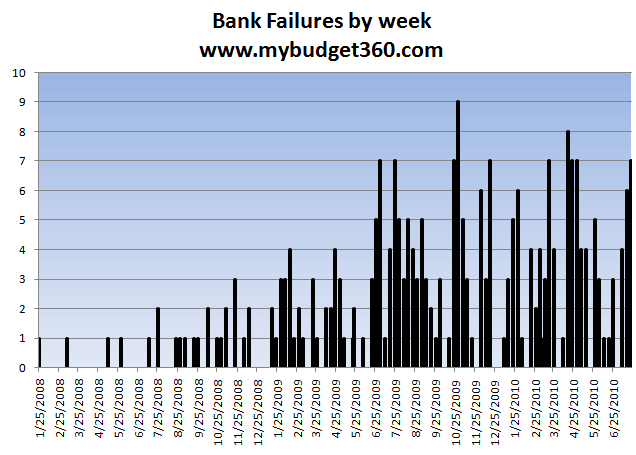
FDIC not too far away from tapping into U.S. Treasury $500 billion taxpayer lifeline. Georgia leads the pack with 40 bank failures since 2008.
By the end of the recession, there will be approximately 1,000 bank failures. Does this sound extreme? It should but the numbers don’t cover the entire story. Since 2008 the number of bank failures has reached 269 and this doesn’t include consolidations done through the FDIC where bigger banks ate up smaller banks before they officially failed. Last week, 7 banks failed. At that pace, we are looking at 364 bank failures per year and the actual number of closings per week has consistently gone up. The FDIC is in a precarious situation. The Deposit Insurance Fund (DIF) is technically speaking, broke. They have added additional cash reserves by front loading premiums on surviving banks but this can only stunt the financial bleeding for so long. The problems in the banking system run deep and many of the smaller regional banks are failing because of commercial real estate loans going bad.
Source: FDIC
The trend is unmistakable.
It is a game of confidence that we have increased the actual amount of deposit insurance to $250,000 from $100,000 at a time when the actual insurance fund is negative. You would think that something this problematic will cause for a sense of urgency but the government is giving the FDIC until 2020 to get this fixed.
While the government gives the FDIC until 2020 to get their house in order, this is how the deposit insurance fund is looking:
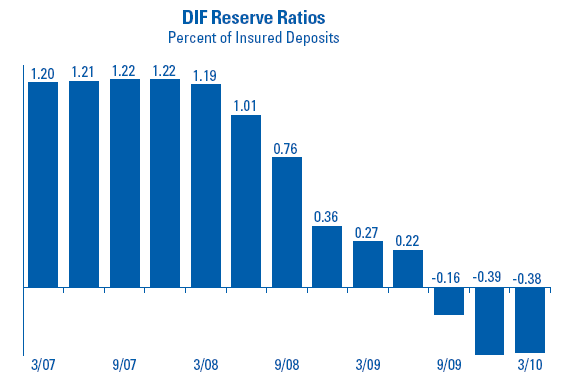
This is the third consecutive quarter in the absolute red. The banking system is starting to look like an imploding ponzi scheme and Wall Street is capitalizing on this vulnerability. How? If you were a big time investor would you invest in a too big to fail bank that may be performing poorly but has full government support or a smaller well run bank that has no support at all? The incentive is not necessarily with the best performing and that is usually a staple of a well run capitalist system. We are not operating in a capitalist system but a corporate oligarchy based on political connections between Wall Street and D.C. This kind of system has been prevalent for decades now and crosses both political parties.